

What Is the Difference Between a Commercial and Industrial Electrician?
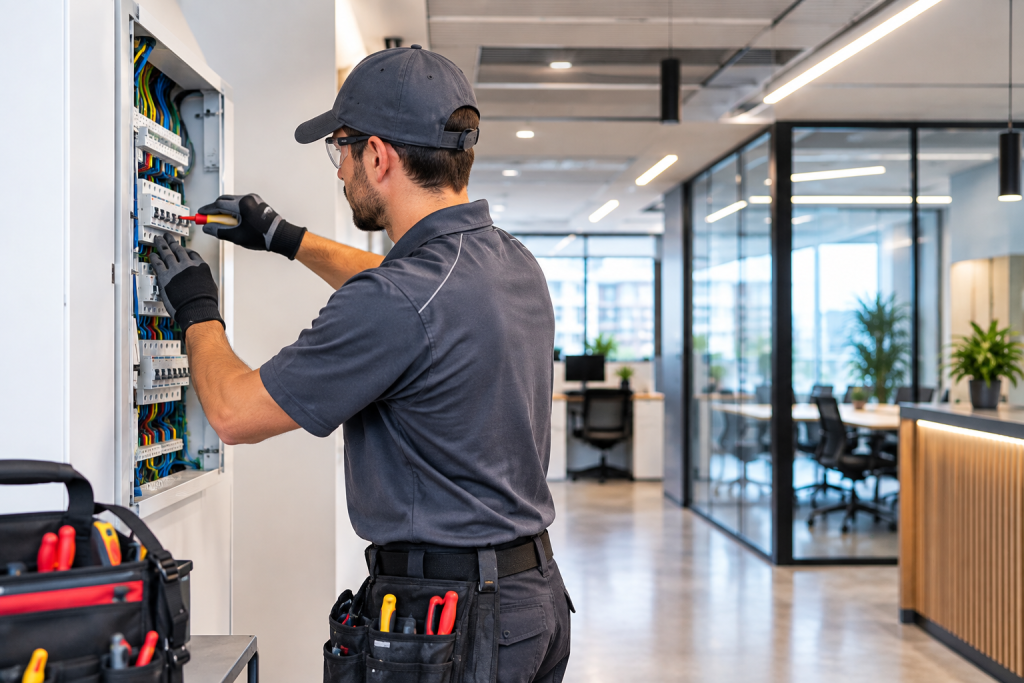
The difference between a commercial and industrial electrician is related to the type of site, equipment, and electrical systems they work with.
A commercial electrician generally works on electrical systems in buildings, which can be offices, retail premises, schools, and hospitality venues.
An industrial electrician works with electrical systems used in large-scale factories and warehouses or workshops. Let’s see the difference between these two areas of electrical work.
Commercial vs Industrial Electrician: What Are the Key Differences?
The main difference between a commercial and industrial electrician is the working environment and the electrical systems being serviced. Commercial electrical solutions are for non-residential buildings, like offices and malls. Industrial electricians work in specialised areas where high-voltage electrical systems are used.
Aspect | Commercial Electrician | Industrial Electrician |
|---|---|---|
Work Premises | Works mainly in offices, shops, schools, restaurants, hotels and other commercial buildings | Works mainly in factories, manufacturing facilities, warehouses, workshops, processing plants and other industrial sites |
Scope of Work | Installs and maintains lighting, power outlets, distribution boards and building electrical services | Works with machinery, motors, control systems, switchboards and industrial electrical equipment |
Typical Projects | Often works as part of a commercial construction, fit-out or building maintenance project | May work on production equipment, process systems, plant upgrades and industrial maintenance |
Nature of Electrical Systems | Electrical systems are generally focused on supplying and managing power throughout a building | Electrical systems may be integrated with machinery, automation and production processes |
Typical Work | Common work includes lighting upgrades, electrical fit-outs and power installations | Common work includes motor control, machinery connections, fault finding and industrial equipment maintenance |
Despite these commercial vs industrial electrician differences, there can be overlap between the duties of both professionals.
This is because in Western Australia, an unrestricted electrical worker licence (EW licence) covers general electrical installation, maintenance, and repair work across commercial and industrial settings. At AJ Coast Electrical, we have fully licensed and qualified electricians who undertake various commercial and industrial electrical work.
What Electrical Systems Do Commercial Electricians Work With?
Commercial electricians work with lighting, power, and safety systems that keep business premises functional. Electrical maintenance reduces downtime for commercial businesses by identifying weaknesses before they escalate. Typical commercial electrical systems include:
- Lighting systems: Internal lighting, external lighting, emergency lighting, and lighting controls.
- General power: Power outlets, dedicated circuits, and electrical supplies for commercial equipment.
- Distribution boards and switchboards: Equipment used to distribute electrical power throughout a building.
- Three-phase power: Commercial premises may require three-phase supplies for larger equipment and electrical loads.
- Electrical fit-outs: Installation of lighting, power, cabling and other electrical services for new or refurbished commercial spaces.
- Building services: Electrical supplies for equipment such as air-conditioning systems, pumps and other fixed building services.
- Safety and control systems: Electricians may install or connect systems associated with emergency power, controls and other building services.
Under Regulation 49 of the Electricity (Licensing) Regulations 1991, commercial electrical work in WA should comply with the WA Electrical Requirements (WAER). It should meet AS/NZS 3000 (Wiring Rules) standards.
When Do You Need a Commercial Electrician?
A commercial electrician is needed when electrical work is required in a business or public-facing building. Commercial electrician services involve work related to building power, lighting, electrical fit-outs, or ongoing electrical maintenance.
Contacting a commercial electrician is also important for emergency electrical services for issues like sudden power loss and burning smells. Here are the situations that demand a commercial electrician:
- When you notice urgent electrical warning signs like tripping breakers, warm outlets, flickering lights, and weird noises from appliances.
- When you’re installing or upgrading lighting, or adding power points and dedicated circuits in your commercial space.
- When you’re planning a store fit-out or remodelling your office.
- You need larger electrical load capacity because of growing operations.
- You need to carry out electrical maintenance in your facility.
- You need someone to perform safety audits for your building for compliance purposes.
When Do You Need an Industrial Electrician?
You need an industrial electrician when electrical work involves heavy industrial machinery or the electrical infrastructure for a process. Industrial electricians work on automation equipment and can be involved in fault finding and equipment maintenance. Contact them in the following cases:
- You need to install, maintain, or connect electrical systems
- Fix issues with automated systems like programmable logic controllers and variable speed drives.
- Service electrical systems for compliance with safety standards
- Resolve urgent electrical failures that bring manufacturing processes to a halt.
- Interpret and use technical drawings and diagrams for electrical wiring work in an industry.
- Expand heavy power distribution networks to support bigger industrial loads.
How Do You Choose the Right Electrician for Your Project?
You should choose a commercial electrician when electrical work is required in non-residential and non-industrial settings. These include offices, schools, restaurants, and retail stores.
An industrial electrician should be chosen to work in a specialised industrial environment. Contact them when electrical tasks involve heavy machinery, complex automation, and production line installation.
Besides, the electrician you contact should have the appropriate licence, skills, and experience to perform the job. Many industrial electricians in WA have additional industrial electrical safety certifications. They have completed specialised courses in energy efficiency, control units, and hazardous locations. This makes them more reliable for specific industrial processes.
Thus, the following factors influence the choice between calling a specific type of electrician:
- Type of electrical work
- Equipment being installed or serviced
- Area where the work will happen
- Licensing and relevant certifications
- A good record of working with similar facilities
- Strength of their electrical contracting team
Closing Thoughts:
Industrial and commercial electricians work on different types of electrical systems. At times, their work can overlap in some environments. Commercial electricians focus more on business electrical work, while industrial electricians work in high-voltage areas. Both these categories have specialised skills and expertise with which they diagnose and fix various electrical issues.
Choosing a licensed electrician with local expertise, like AJ Coast Electrical, matters significantly for commercial and industrial tasks. We provide fast and safe services to businesses and industrial warehouses across Perth.
Our deep understanding of the local climate and common issues in Perth buildings helps you with personalised services. We are also available 24 hours a day to assist with simple to complex electrical issues.
Frequently Asked Questions
It depends on the electrician’s qualifications, licensing, experience, and the complexity of the industrial system. Some industrial work may require specialised skills and additional authorisations.
Offices, retail stores, restaurants, warehouses and other commercial properties require commercial electricians. They work on installations, maintenance, upgrades and electrical repairs.
An industrial electrician is needed in manufacturing plants, factories, processing facilities and other industrial sites. The electricians are experienced with complex electrical systems, machinery and specialised equipment.
Yes, Commercial and industrial electricians can work with different types of equipment and electrical systems. Commercial work often involves lighting, power distribution and building systems. Industrial work involves machinery, control systems, and high-demand electrical infrastructure.
A commercial property needs emergency electrical services when a sudden electrical fault creates a safety risk. Such issues disrupt essential operations and require immediate attention.
