

Electrician vs Electrical Contractor: What’s the Difference?
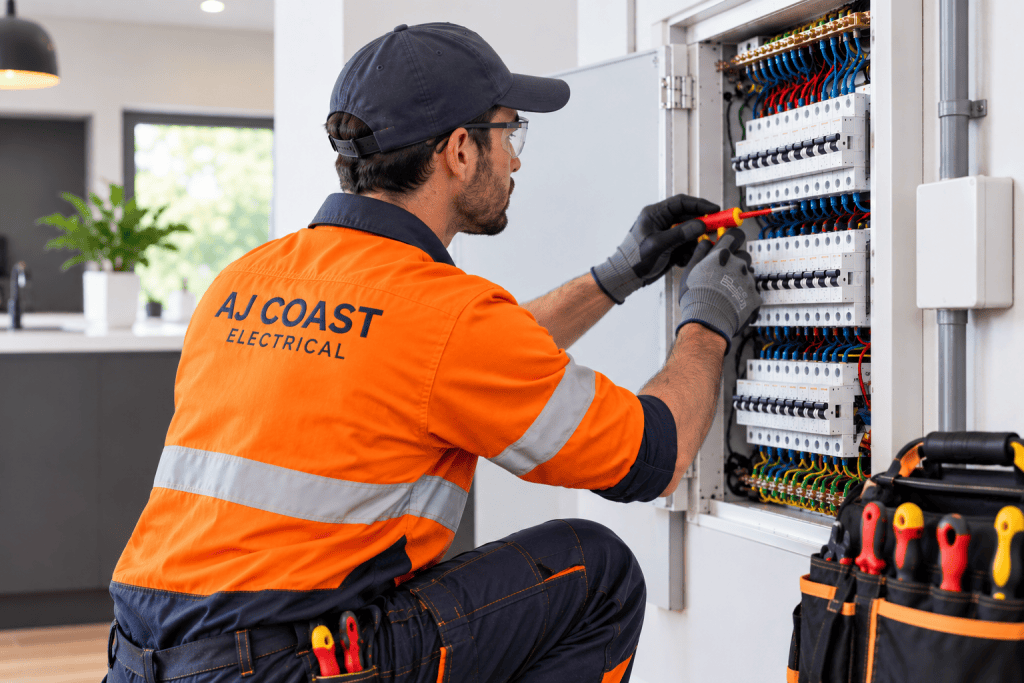
An electrician and an electrical contractor are two distinct electrical professionals who play a significant role in homes and businesses. If you want to hire professionals for electrical servicing and repairs in Perth, you must know the distinction between them.
A licenced electrical professional ensures safe and reliable electrical work for every residential or commercial project, and hiring them is a compliance requirement according to Western Australian safety regulations and insurance.
At AJ Coast Electrical, we want to empower our clients with knowledge, and so we’ve put together this guide to help you uncover major differences between electricians and electrical contractors and find suitable professionals for your needs quickly.
Electrician vs Electrical Contractor: Key Differences
An electrician holds the technical qualifications to perform electrical work. An electrical contractor has the legal authority to run a business that offers electrician services. This variation in legal authority and business structure constitutes the major difference between an electrical contractor and an electrician.
AJ Coast Electrical belongs to the professional electrical contractor category. We provide quality electrical solutions for residential and commercial properties across Perth with full focus on safety, professional workmanship, and exceptional customer service.
| Feature | Electrician | Electrical Contractor |
|---|---|---|
| Licensing | Holds an Electrical Worker’s Licence endorsed as an Electrician’s Licence (A Grade licence) and public liability insurance | Holds an Electrical Contractor’s Licence (EC licence), which authorises an individual or business to carry on business as an electrical contractor |
| Role/Scope | Performs electrical work such as installation, testing, and maintenance | Contracts with customers and businesses for electrical installation work and ensures it meets industry standards |
| Legal responsibility | Personally responsible for carrying out electrical work according to licensing and safety requirements | Has additional statutory responsibilities associated with the contracting business |
| Contracting/Advertising | An electrician without an EC licence generally cannot independently carry on business They cannot perform electrical installation work outside the authorised employment arrangements | May carry on business as an electrical contractor. Advertising for the contracting business must display the EC licence number. |
Can an Electrician Also Be an Electrical Contractor in Perth?
Yes. In Perth and Western Australia, a licenced electrician can also become an electrical contractor. But the two roles require different licences, which is where electrician vs electrical contractor differences come into play.
| Aspect | Electrician’s Licence (EW Licence) | Electrical Contractor’s Licence (EC Licence) |
|---|---|---|
| What it authorises | Allows an individual to perform electrical work within the scope of their licence. | Allows a person or business to contract with customers and operate an electrical contracting business. |
| Who holds it? | An individual electrician. | A sole trader, company, or other eligible business entity. |
| Can they perform electrical work? | Yes, provided the work is within the scope of their EW licence. | The business can provide electrical services through appropriately licenced electricians. |
| Can they contract with customers? | An EW licence alone does not authorise the holder to operate an electrical contracting business or contract with customers. | Yes. An EC licence authorises the business to contract with customers for electrical work. |
| Nominee requirement | Not applicable simply because the person holds an EW licence. | The licensing requirements require a current WA electrician to act as the contractor’s nominee and meet the required electrical operational competency requirements. |
| Business requirements | Holding an EW licence does not, by itself, satisfy the requirements for operating an electrical contracting business. | The business must meet applicable management competency requirements and maintain the required public-liability insurance. |
| Example | A sole-trader electrician may hold an EW licence and personally carry out electrical work. | The same sole trader may also hold an EC licence to contract with customers and operate the electrical contracting business. |
| For companies | Employees who perform electrical work must hold the appropriate electrician’s licence. | A company can hold an EC licence and provide professional commercial electrical services through licenced electricians who are its employees. |
The electrician can also have an EC licence that allows them to contract with customers and operate the electrical contracting business. In the same way, a company can hold the contractor licence and provide professional commercial electrical services by licenced electricians who are its employees.
What Services Does an Electrical Contractor Provide?
Electrical contractors handle the entire lifecycle of electrical work for their customers, be it residential or commercial, from original planning to final inspection. For instance, AJ Coast Electrical advises on electrical installation and helps commercial spaces with the right electrical appliances. We install and maintain electrical systems at competitive prices in warehouses or manufacturing plants. Here are the major services carried out by an electrical contractor:
· Suggest alterations or additions in the electrical layout of a property
· Produce a thorough electrical layout plan before construction begins
· Ensure that the proposed layout follows applicable standards
· Install and maintain electrical systems
· Inspect electrical equipment for damage
· Lead and co-ordinate the team of electricians
· Handle finances and deal with permits
· Line contractors handle high-voltage power transmission and distribution lines.
· Integrated building systems contractors install and maintain systems that integrate security systems, lighting, and communication networks.
When Should You Hire an Electrician?
You should hire a licenced electrician in Perth whenever you need to install, alter, repair, or maintain any fixed electrical wiring or equipment in your home or business. Using DIY fixes for managing electrical systems is illegal.
According to WA’s Director of Energy Safety, Saj Abdoolakhan, “By law, no one should work on electrical or gas installations at your home or business unless they are a licenced electrician or a licenced gasfitter.’’ Hire a licenced electrician for the following tasks:
· When you need to add power points, or upgrade aging switchboards
· When you are transitioning from halogen to energy-efficient LED downlights, or installing outdoor, garden, and pool lighting.
· Hire an electrician to extend circuits for home additions, undertake renovations, or commercial shop fit-outs.
· Installing and servicing split system or evaporative air conditioning units.
· An electrician should be hired to test RCD safety switches and safety checks on existing power points.
When Should You Hire an Electrical Contractor?
In Western Australia, if you are engaging someone to do contracted electrical installation work at your home or business, you should use a licenced electrical contractor. Here, it is important to understand the electrician vs electrical contractor differences. The right electrical contractor depends on the type and scale of work you need to complete.
1. For Electrical Repairs or Emergency Assistance
Burning smells, sparking outlets, electrical shocks, repeatedly tripping safety switches, damaged wiring and unexplained loss of power can indicate a serious fault. This requires you to contact a licensed electrical contractor.
AJ Coast Electrical provides 24/7 emergency electrical services. We find faults and perform general electrical repairs for residential and commercial properties.
2. Building or Home Renovation
A new build or renovation involves a lot of planning, and an electrical contractor ensures that the layout suits how the property will actually be used. Electrical requirements to be taken care of include:
- New circuits and power points
- Switchboard work and safety switches
- Indoor and outdoor lighting
- LED lighting upgrades
- Hard-wired smoke alarms
- Air conditioning
- Home automation
- Data and entertainment cabling
- Security lighting and systems
- Power for sheds, garages and outdoor areas
3. Commercial Fit-Outs and Renovations
Commercial spaces may need specialised lighting and additional power. These spaces require electrical systems particular to the equipment being used. For a fit-out or commercial renovation, look for an electrical contractor with experience working with builders and business owners, and other trades. The contractor must work in a way that reduces disruption, which is significant for a well-functioning business.
4. Industrial and Warehouse Electrical Work
A business may need electrical supply for:
- Machinery
- Upgraded switchboards and circuitry
- Warehouse lighting
- Surge protection
- Additional commercial power or modifications when the premises change use
Regular inspection and maintenance make electrical problems easier to identify before they result in unwanted business disruption.
When we provide services to small to medium warehouses and industrial sites, we make it a priority to work efficiently, in a way that reduces operational downtime. In fact, one of our clients has remarked that we are ‘amazingly efficient with work, completing the jobs quickly and to an excellent standard.
How Do You Choose the Right Electrical Professional?
Homeowners and business owners normally contact a licenced electrical contractor, whose licenced electricians then carry out the required work. Thus, you engage with both an electrician aan nd electrical contractor.
By law in Australia, electricians cannot work independently or bill you directly unless operating under an Electrical Contractor licence. A licenced electrical contractor comes in handy for the following kinds of work:
- Electrical repairs
- Fault finding
- New power points or lighting
- Switchboard upgrades
- Renovation wiring
- New-build wiring
- Commercial electrical installations and fit-outs
- Strata and property maintenance
- Industrial electrical work
- Emergency electrical repairs
The complexity of your project and its size also influence the choice of professional. For small repairs or installations, contact a licenced electrician. Bigger projects or those that require co-ordination with other trades are best done with the aid of a contractor.
Closing Thoughts:
Electricians are best-suited for specific electrical tasks, while electrical contractors manage complete projects for businesses and residences. They ensure project oversight and compliance. People in both professions deal with electrical work, but how they do it differs considerably.
As licenced electrical contractors, AJ Coast Electrical provides cost-effective electrician services across Perth. Holding a current WA electrical licence and public liability insurance, we have been serving North Beach, Cockburn Central, and the surrounding northern suburbs. You can contact us anytime as we are open 24/7.
Frequently Asked Questions
An electrical contractor may be a licenced electrician who operates a contracting business. The terms can describe different roles and responsibilities depending on the work and licensing requirements.
Yes, a qualified electrician may work as an electrical contractor. This is true if they meet the relevant licensing and business requirements for undertaking and managing electrical contracting work.
An electrical contractor typically coordinates the electrical work and manages electricians and subcontractors. The service oversees project requirements, scheduling, and compliance.
Yes, electrical contractors can coordinate professional commercial electrical services. These cover electrical installations, upgrades, maintenance and other work required for commercial properties.
The right electrical contractor depends on factors such as licensing, experience, project requirements, scope of work and the type of electrical services required.
